AD 88-22-11 R1
Applicability
| Type | Manufacturer | Model | Details |
|---|---|---|---|
| aircraft | The Boeing Company | 737-100 Series | Airworthiness Directives; BOEING Model 737 Series Airplanes |
| aircraft | The Boeing Company | 737-200 Series | Airworthiness Directives; BOEING Model 737 Series Airplanes |
| aircraft | The Boeing Company | 737-200C Series | Airworthiness Directives; BOEING Model 737 Series Airplanes |
| aircraft | The Boeing Company | 737-300 Series | Airworthiness Directives; BOEING Model 737 Series Airplanes |
| aircraft | The Boeing Company | 737-400 Series | Airworthiness Directives; BOEING Model 737 Series Airplanes |
| aircraft | The Boeing Company | 737-500 Series | Airworthiness Directives; BOEING Model 737 Series Airplanes |
| aircraft | The Boeing Company | 737-600 Series | Airworthiness Directives; BOEING Model 737 Series Airplanes |
| aircraft | The Boeing Company | 737-700 Series | Airworthiness Directives; BOEING Model 737 Series Airplanes |
| aircraft | The Boeing Company | 737-800 Series | Airworthiness Directives; BOEING Model 737 Series Airplanes |
Unsafe Condition
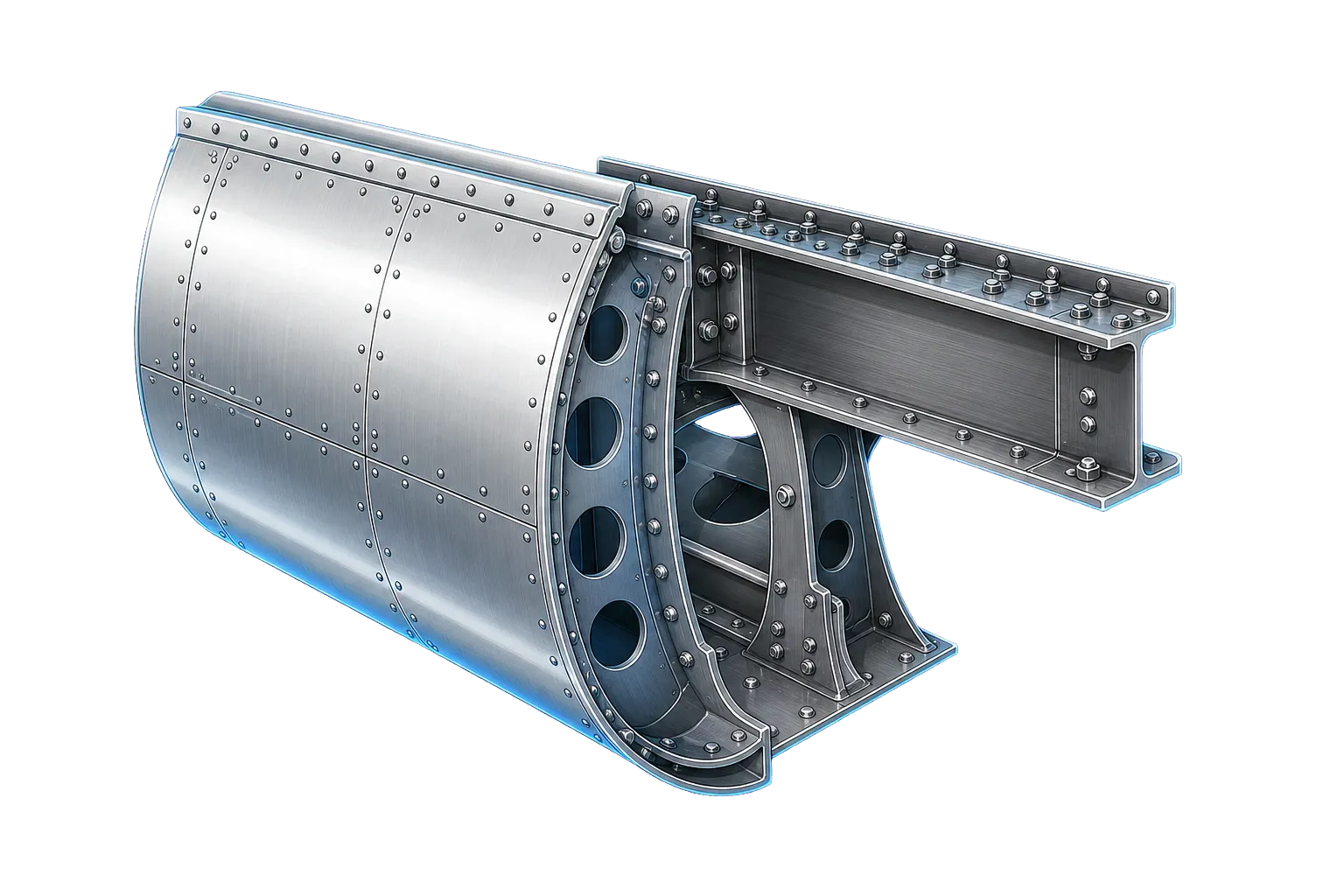
Cracks along the upper rivet line at the fuselage lap joints and along both rivet lines at stringer S-17 could lead to rapid decompression of the airplane.
AI-generated summary from the source AD text. Verify against the official source before acting.
Required Actions
Inspect for cracks using high frequency eddy current inspection and detailed external visual inspection. Repair cracks, corrosion, and delamination prior to further flight. Replace fasteners with standard protruding head solid fasteners within specified cycles. Perform recurring inspections at intervals not exceeding 4,500 landings or 15 months, whichever comes first.
AI-generated summary from the source AD text. Verify against the official source before acting.
Compliance Time
Prior to the accumulation of 40,000 landings or within 10 calendar days after November 21, 1988, whichever occurs later. Initial inspections must be done within 500 landings after specified dates or prior to 40,000/60,000 landings, with recurring intervals as specified.
AI-generated summary from the source AD text. Verify against the official source before acting.
Affected Aircraft
Boeing Model 737 series airplanes, line number 001 through 519, certificated in any category.
AI-generated summary from the source AD text. Verify against the official source before acting.
Federal Register Abstract
Fuselage Lap Joints
Applicability Source Text
Show captured applicability text from the source AD
AD Final Rules - DRS_88-22-11_R.html
Copy URL
Print/Save as PDF
Document Versions
 Feedback
Details
AD Number:
88-22-11 R1
Document Type:
AD Final Rules
Docket Number:
89-NM-141-AD
Subject Heading:
Airworthiness Directives; BOEING Model 737 Series Airplanes
Subject:
Fuselage Lap Joints
Status:
Current
Citation:
This information is not available.
Citation Publish Date:
Effective Date:
01/31/1990
Make:
The Boeing Company
Model:
737-100 Series | 737-200 Series | 737-200C Series | 737-300 Series | 737-400 Series | 737-500 Series...Show more
Product Type:
Aircraft
Product Subtype:
Large Airplane
Affected AD:
Superseded AD:
Affected By:
Superseded By:
Service/Office:
Office of Primary Responsibility:
CFR Part Reference:
Part 39
Comments:
AIRWORTHINESS DIRECTIVES FINAL RULES: 88-22-11 R1
CITATION:   This information is not available.

PAGE NUMBER:

DOCKET NUMBER:   89-NM-141-AD

AMENDMENT:   39-6432

AD NUMBER:   88-22-11 R1

SUBJECT HEADING:   Airworthiness Directives; BOEING Model 737 Series Airplanes

ACTION:

SUMMARY:

DATES:   Effective January 31, 1990.

ADDRESSES:

FOR FURTHER INFORMATION CONTACT:

SUPPLEMENTARY INFORMATION:

REGULATORY TEXT:
88-22-11 R1 BOEING: Amendment 39-6059 as revised by Amendment 39-6432. Docket No. 89-NM-141-AD.

Applicability: Model 737 series airplanes, line number 001 through 519, certificated in any category.

Compliance: Required as indicated, unless previously accomplished.

To prevent rapid decompression of the airplane, accomplish the following:

A. For airplanes line number 001 through 291, prior to the accumulation of 40,000 landings, or within 10 calendar days after November 21, 1988 (the effective date of Amendment 39-6059), whichever occurs later, restrict all flight operations to a maximum cabin pressure differential of 5.67 psi until the inspections required by paragraph B.1., below, are accomplished.

B. 1. For airplanes line number 001 through 291, within the next 1,500 landings after November 21, 1988, or prior to the accumulation of 40,000 landings, whichever occurs later, unless previously accomplished within the last 3,000 landings; and thereafter at intervals not to exceed 4,500 landings or 15 months, whichever occurs first; accomplish the requirements of paragraph C., below, along the skin at all fuselage lap joints between body station BS 259 and BS 1016.

2. At the initial interval indicated in Table 1, below, unless previously accomplished within the last 4,000 landings, accomplish the requirements of paragraph C., below, along the skin at stringer (S) 17 between BS 360 and BS 540 and between BS 727 and BS 927.
TABLE 1

AIRPLANE LINE NUMBER INITIAL INSPECTION

001 through 291 Within 500 landings after November 21, 1988, or prior
to the accumulation of 40,000 landings, whichever
occurs later.

292 through 464 Within 500 landings after November 21, 1988, or prior
to the accumulation of 60,000 landings whichever
occurs later.

465 through 519 Within 500 landings after the effective date of this
amendment, or prior to the accumulation of 60,000
landings, whichever occurs later.

Repeat the inspection at intervals not to exceed 4,500 landings or 15 months, whichever occurs first.

C. For airplanes identified in paragraphs B.1. and B.2., above, remove paint with an approved chemical stripper, or ensure that the fastener head is clearly visible prior to the inspections required by this paragraph:

1. Perform a high frequency eddy current inspection for cracks along the upper rivet line at the lap joints and along both rivet lines at S-17, in accordance with Boeing Service Bulletin 737-53A1039, Revision 4, dated April 14, 1988, or Revision 5, dated May 25, 1989, or Boeing Service Bulletin 737-53-1089, Revision 1, dated October 13, 1988, or Revision 3, dated November 2, 1989, accordingly.

NOTE: No credit will be given for previous inspections accomplished on a painted surface where the fastener head was not clearly visible.

2. Perform a detailed external visual inspection, using adequate lighting for evidence of corrosion or delamination. Inspect for small cracks, bulging skin between fasteners, blistered paint, dished or popped rivet heads, or loose fasteners. If evidence of corrosion or delamination is found, prior to further flight, perform a low frequency eddy current inspection for corrosion to determine material loss, of the entire length of the affected panel, in accordance with Boeing Alert Service Bulletin 737-53A1039, Revision 4, dated April 14, 1988, or Revision 5, dated May 25, 1989, or Boeing Service Bulletin 737-53-1089, Revision 1, dated October 13, 1988, or Revision 3, dated November 2, 1989.

3. Repair cracks, corrosion, and delamination prior to further flight (except as permitted by paragraph G., below), in accordance with Boeing Alert Service Bulletin 737-53A1039, Revision 4, dated April 14, 1988, or Revision 5, dated May 25, 1989, or Boeing Service Bulletin 737-53-1089, Revision 1, dated October 13, 1988, or Revision 3, dated November 2, 1989.

a. All upper row fasteners at the lap joint and both rows of fasteners at S-17 of any skin panel in which cracks are found, must be replaced with standard protruding head solid fasteners, in accordance with the applicable service bulletin, within 3,000 cycles following the repair.

b. Blind fasteners are to be used as an interim repair only, and must be replaced with protruding head solid fasteners within 3,000 cycles following installation.

(1) For airplanes line number 001 through 464: Repairs installed with blind fasteners prior to November 21, 1988, must be inspected for loose or missing fasteners within 1,000 cycles after that date; and all upper row fasteners and stringer 17 fasteners in the affected panel must be replaced with standard protruding head solid fasteners within 3,000 cycles after that date.

(2) For airplanes line numbers 465 through 519: Repairs installed with blind fasteners prior to the effective date of this amendment, must be inspected for loose or missing fasteners within 1,000 cycles after the effective date of this amendment; and all upper row fasteners and stringer 17 fasteners in the affected panel must be replaced with standard protruding head solid fasteners within 3,000 cycles after the effective date of this amendment.

c. (1) For airplanes line numbers 001 through 464: Repairs of the skin installed with countersunk fasteners at any fuselage lap joint or along S-17 prior to November 21, 1988, must be inspected and verified as FAA-approved within 1,000 cycles after that date. Repairs determined not to be FAA- approved must be replaced or modified in accordance with an FAA-approved method prior to further flight.

(2) For airplanes line numbers 465 through 519: Repairs of the skin installed with countersunk fasteners at any fuselage lap joint or along S-17 prior to the effective date of this amendment, must be inspected and verified as FAA-approved within 1,000 cycles after the effective date of this amendment. Repairs determined not to be FAA approved must be replaced or modified in accordance with an FAA-approved method prior to further flight.

D. For airplanes line number 001 through 291, within the next 2,250 landings or within 6 months after November 21, 1988, whichever occurs first, or prior to the accumulation of 40,000 landings, whichever occurs later, unless accomplished within the last 9,750 landings; and thereafter at intervals not to exceed 12,000 landings or 4 years, whichever occurs first; accomplish the inspections described in paragraph F., below. If the inspections required by paragraph C., above, are repeated at intervals not to exceed 2,250 landings or 7 1/2 months, whichever occurs first, then the requirements of paragraph F., below, may be deferred until the accumulation of 7,000 landings or 24 months after November 21, 1988, whichever occurs first.

E. For airplanes line number 292 through 464, within the next 12,000 landings or 4 years after November 21, 1988, whichever occurs first, and for airplanes line number 465 through 519, within the next 12,000 landings or 4 years after the effective date of this amendment, whichever occurs first, or prior to the accumulation of 40,000 landings, whichever occurs later, and thereafter at intervals not to exceed 12,000 landings or 4 years, whichever occurs first, accomplish the inspections described in paragraph F., below.

F. As required by paragraphs D. and E., above, perform a detailed internal visual inspection of tearstraps (circumferential portion of the bonded waffle doubler), not mechanically fastened to the skin between BS 360 and BS 1016 two bays above and one bay below the lap joints at S-4 and S-10, and between BS 259 and BS 360 two bays above and one bay below the lap joint at S-4 for delamination and corrosion, in accordance with Boeing Alert Service Bulletin 737-53A1039, Revision 4, dated April 14, 1988, or Revision 5, dated May 25, 1989. Adequate lighting must be used for this inspection. Inspect for bulges in the doubler, white powder or a thin black line at the edges of the doubler, and missing or dished fasteners. Check for disbond by pushing outward on the skin while attempting to insert a feeler gage between the doubler and skin. If inspection areas are obscured by sealant, dirt, etc., these areas must be cleaned. If disbond or corrosion is found, inspect entire skin panel as described above, in addition to one bay of the adjacent skin panel (above and below), and repair prior to further flight, in accordance with Boeing Alert Service Bulletin 737-53A1039, Revision 4, dated April 14, 1988, or Revision 5, dated May 25, 1989, or Boeing Service Bulletin 737-53-1089, Revision 1, dated October 13, 1988, or Revision 3, dated November 2, 1989, as appropriate.

G. If corrosion found as a result of the external inspection does not exceed 10 percent of the skin thickness, reinspect for corrosion in accordance with paragraphs C.2. or I., of this AD, as appropriate, at intervals not to exceed 2,250 cycles or 6 months, whichever occurs first, until a repair is accomplished. If such corrosion exceeds 10 percent of skin thickness or if cracking is found, repair prior to further flight, in accordance with Boeing Alert Service Bulletin 737-53A1039, Revision 4, dated April 14, 1988, or Revision 5, dated May 25, 1989, for the skin along the lap joints; or Boeing Service Bulletin 737-53-1089, Revision 1, dated October 13, 1988, or Revision 3, dated November 2, 1989, for the skin along S-17. Following such repair, resume inspections in accordance with paragraphs C.2. or I. of this AD, as appropriate.

H. The accomplishment of the following two subparagraphs constitutes terminating action for the inspections indicated:

1. a. For airplanes line number 001 through 291, accomplishment of the terminating repair at all lap joints between BS 259 and BS 1016, in accordance with Boeing Alert Service Bulletin 737- 53A1039, Revision 4, dated April 14, 1988, or Revision 5, dated May 25, 1989, constitutes terminating action for paragraphs A., C., and F., as they apply to lap joint areas. This repair includes replacing all upper row fasteners with standard protruding head solid fasteners and assuring the tearstraps are functional 2 bays above and 1 bay below each lap joint, by the use of mechanical fasteners where disbonding of the tearstraps has occurred.

b. For airplanes line number 292 through 519, perform a detailed internal visual inspection of the tearstraps for delamination and corrosion 2 bays above and 1 bay below all lap joints between BS 259 and BS 1016, in accordance with Boeing Alert Service Bulletin 737-53A1039, Revision 4, dated April 14, 1988, or Revision 5, dated May 25, 1989. Repair delamination and corrosion in accordance with the service bulletin using mechanical fasteners, as necessary. In skin panels where delamination is detected, accomplish the lap joint modification in accordance with the service bulletin. This subparagraph constitutes terminating action for paragraph F., above.

2. Accomplishment of the preventative modification as described in Boeing Service Bulletin 737-53-1089, Revision 1, dated October 13, 1988, or Revision 3, dated November 2, 1989, constitutes terminating action for the requirements of paragraphs A., C., and F. as they apply to the skin at S-17. The repair requires using standard protruding head solid fasteners, and assuring that the tearstraps are functional one bay above and below S-17, by the use of mechanical fasteners where disbonding of the tearstraps has occurred, in accordance with the Structural Repair Manual.

I. For aircraft on which the procedures described in paragraph H.1., above, have been accomplished in accordance with Part IV, A.2., of Boeing Alert Service Bulletin 737-53A1039, Revision 4, dated April 14, 1988, or Part II, B. of Boeing Service Bulletin 737-53A1039, Revision 5, dated May 25, 1989, within 15 months after accomplishment, or within 6 months after the effective date of this AD, whichever occurs later, perform an external visual inspection of the skin for corrosion and delamination at all lap joints in accordance with that service bulletin. If corrosion is found, prior to further flight, perform a low frequency eddy current inspection of the entire length of the affected panel to determine material loss. If cracks are found, prior to further flight, perform a high frequency eddy current inspection of the entire length of the affected skin panel in accordance with the service bulletin. Repair cracks, corrosion, and delamination, prior to further flight (except as permitted by paragraph G., above), in accordance with the service bulletin. Inspections are to continue at intervals not to exceed 15 months.

J. An alternate means of compliance or adjustment of the compliance time, which provides an acceptable level of safety, may be used when approved by the Manager, Seattle Aircraft Certification Office, FAA, Northwest Mountain Region.

NOTE: The request should be forwarded through an FAA Principal Maintenance Inspector (PMI), who will either concur or comment and then send it to the Manager, Seattle Aircraft Certification Office.

K. Special flight permits may be issued in accordance with FAR 21.197 and 21.199 to operate airplanes to a base in order to comply with the requirements of this AD.

All persons affected by this directive who have not already received the appropriate service documents from the manufacturer may obtain copies upon request to Boeing Commercial Airplanes, P.O. Box 3707, Seattle, Washington 98124. These documents may be examined at the FAA, Northwest Mountain Region, Transport Airplane Directorate, 17900 Pacific Highway South, Seattle, Washington, or Seattle Aircraft Certification Office, 9010 East Marginal Way South, Seattle, Washington.

Airworthiness Directive 88-22-11, Amendment 39-6059, superseded AD 87-21-08 (Amendment 39-5752) and Telegraphic AD T88-10-51 which was issued on May 4, 1988, and which superseded Telegraphic AD T88-09- 51 issued on April 29, 1988.

This AD revises AD 88-22-11, Amendment 39-6059.
This amendment (39-6432, AD 88-22-11 R1) becomes effective on January 31, 1990.

FOOTER:
Document Text
Show stored source text (verify against official source)
AD Final Rules - DRS_88-22-11_R.html
Copy URL
Print/Save as PDF
Document Versions
 Feedback
Details
AD Number:
88-22-11 R1
Document Type:
AD Final Rules
Docket Number:
89-NM-141-AD
Subject Heading:
Airworthiness Directives; BOEING Model 737 Series Airplanes
Subject:
Fuselage Lap Joints
Status:
Current
Citation:
This information is not available.
Citation Publish Date:
Effective Date:
01/31/1990
Make:
The Boeing Company
Model:
737-100 Series | 737-200 Series | 737-200C Series | 737-300 Series | 737-400 Series | 737-500 Series...Show more
Product Type:
Aircraft
Product Subtype:
Large Airplane
Affected AD:
Superseded AD:
Affected By:
Superseded By:
Service/Office:
Office of Primary Responsibility:
CFR Part Reference:
Part 39
Comments:
AIRWORTHINESS DIRECTIVES FINAL RULES: 88-22-11 R1
CITATION:   This information is not available.

PAGE NUMBER:

DOCKET NUMBER:   89-NM-141-AD

AMENDMENT:   39-6432

AD NUMBER:   88-22-11 R1

SUBJECT HEADING:   Airworthiness Directives; BOEING Model 737 Series Airplanes

ACTION:

SUMMARY:

DATES:   Effective January 31, 1990.

ADDRESSES:

FOR FURTHER INFORMATION CONTACT:

SUPPLEMENTARY INFORMATION:

REGULATORY TEXT:
88-22-11 R1 BOEING: Amendment 39-6059 as revised by Amendment 39-6432. Docket No. 89-NM-141-AD.

Applicability: Model 737 series airplanes, line number 001 through 519, certificated in any category.

Compliance: Required as indicated, unless previously accomplished.

To prevent rapid decompression of the airplane, accomplish the following:

A. For airplanes line number 001 through 291, prior to the accumulation of 40,000 landings, or within 10 calendar days after November 21, 1988 (the effective date of Amendment 39-6059), whichever occurs later, restrict all flight operations to a maximum cabin pressure differential of 5.67 psi until the inspections required by paragraph B.1., below, are accomplished.

B. 1. For airplanes line number 001 through 291, within the next 1,500 landings after November 21, 1988, or prior to the accumulation of 40,000 landings, whichever occurs later, unless previously accomplished within the last 3,000 landings; and thereafter at intervals not to exceed 4,500 landings or 15 months, whichever occurs first; accomplish the requirements of paragraph C., below, along the skin at all fuselage lap joints between body station BS 259 and BS 1016.

2. At the initial interval indicated in Table 1, below, unless previously accomplished within the last 4,000 landings, accomplish the requirements of paragraph C., below, along the skin at stringer (S) 17 between BS 360 and BS 540 and between BS 727 and BS 927.
TABLE 1

AIRPLANE LINE NUMBER INITIAL INSPECTION

001 through 291 Within 500 landings after November 21, 1988, or prior
to the accumulation of 40,000 landings, whichever
occurs later.

292 through 464 Within 500 landings after November 21, 1988, or prior
to the accumulation of 60,000 landings whichever
occurs later.

465 through 519 Within 500 landings after the effective date of this
amendment, or prior to the accumulation of 60,000
landings, whichever occurs later.

Repeat the inspection at intervals not to exceed 4,500 landings or 15 months, whichever occurs first.

C. For airplanes identified in paragraphs B.1. and B.2., above, remove paint with an approved chemical stripper, or ensure that the fastener head is clearly visible prior to the inspections required by this paragraph:

1. Perform a high frequency eddy current inspection for cracks along the upper rivet line at the lap joints and along both rivet lines at S-17, in accordance with Boeing Service Bulletin 737-53A1039, Revision 4, dated April 14, 1988, or Revision 5, dated May 25, 1989, or Boeing Service Bulletin 737-53-1089, Revision 1, dated October 13, 1988, or Revision 3, dated November 2, 1989, accordingly.

NOTE: No credit will be given for previous inspections accomplished on a painted surface where the fastener head was not clearly visible.

2. Perform a detailed external visual inspection, using adequate lighting for evidence of corrosion or delamination. Inspect for small cracks, bulging skin between fasteners, blistered paint, dished or popped rivet heads, or loose fasteners. If evidence of corrosion or delamination is found, prior to further flight, perform a low frequency eddy current inspection for corrosion to determine material loss, of the entire length of the affected panel, in accordance with Boeing Alert Service Bulletin 737-53A1039, Revision 4, dated April 14, 1988, or Revision 5, dated May 25, 1989, or Boeing Service Bulletin 737-53-1089, Revision 1, dated October 13, 1988, or Revision 3, dated November 2, 1989.

3. Repair cracks, corrosion, and delamination prior to further flight (except as permitted by paragraph G., below), in accordance with Boeing Alert Service Bulletin 737-53A1039, Revision 4, dated April 14, 1988, or Revision 5, dated May 25, 1989, or Boeing Service Bulletin 737-53-1089, Revision 1, dated October 13, 1988, or Revision 3, dated November 2, 1989.

a. All upper row fasteners at the lap joint and both rows of fasteners at S-17 of any skin panel in which cracks are found, must be replaced with standard protruding head solid fasteners, in accordance with the applicable service bulletin, within 3,000 cycles following the repair.

b. Blind fasteners are to be used as an interim repair only, and must be replaced with protruding head solid fasteners within 3,000 cycles following installation.

(1) For airplanes line number 001 through 464: Repairs installed with blind fasteners prior to November 21, 1988, must be inspected for loose or missing fasteners within 1,000 cycles after that date; and all upper row fasteners and stringer 17 fasteners in the affected panel must be replaced with standard protruding head solid fasteners within 3,000 cycles after that date.

(2) For airplanes line numbers 465 through 519: Repairs installed with blind fasteners prior to the effective date of this amendment, must be inspected for loose or missing fasteners within 1,000 cycles after the effective date of this amendment; and all upper row fasteners and stringer 17 fasteners in the affected panel must be replaced with standard protruding head solid fasteners within 3,000 cycles after the effective date of this amendment.

c. (1) For airplanes line numbers 001 through 464: Repairs of the skin installed with countersunk fasteners at any fuselage lap joint or along S-17 prior to November 21, 1988, must be inspected and verified as FAA-approved within 1,000 cycles after that date. Repairs determined not to be FAA- approved must be replaced or modified in accordance with an FAA-approved method prior to further flight.

(2) For airplanes line numbers 465 through 519: Repairs of the skin installed with countersunk fasteners at any fuselage lap joint or along S-17 prior to the effective date of this amendment, must be inspected and verified as FAA-approved within 1,000 cycles after the effective date of this amendment. Repairs determined not to be FAA approved must be replaced or modified in accordance with an FAA-approved method prior to further flight.

D. For airplanes line number 001 through 291, within the next 2,250 landings or within 6 months after November 21, 1988, whichever occurs first, or prior to the accumulation of 40,000 landings, whichever occurs later, unless accomplished within the last 9,750 landings; and thereafter at intervals not to exceed 12,000 landings or 4 years, whichever occurs first; accomplish the inspections described in paragraph F., below. If the inspections required by paragraph C., above, are repeated at intervals not to exceed 2,250 landings or 7 1/2 months, whichever occurs first, then the requirements of paragraph F., below, may be deferred until the accumulation of 7,000 landings or 24 months after November 21, 1988, whichever occurs first.

E. For airplanes line number 292 through 464, within the next 12,000 landings or 4 years after November 21, 1988, whichever occurs first, and for airplanes line number 465 through 519, within the next 12,000 landings or 4 years after the effective date of this amendment, whichever occurs first, or prior to the accumulation of 40,000 landings, whichever occurs later, and thereafter at intervals not to exceed 12,000 landings or 4 years, whichever occurs first, accomplish the inspections described in paragraph F., below.

F. As required by paragraphs D. and E., above, perform a detailed internal visual inspection of tearstraps (circumferential portion of the bonded waffle doubler), not mechanically fastened to the skin between BS 360 and BS 1016 two bays above and one bay below the lap joints at S-4 and S-10, and between BS 259 and BS 360 two bays above and one bay below the lap joint at S-4 for delamination and corrosion, in accordance with Boeing Alert Service Bulletin 737-53A1039, Revision 4, dated April 14, 1988, or Revision 5, dated May 25, 1989. Adequate lighting must be used for this inspection. Inspect for bulges in the doubler, white powder or a thin black line at the edges of the doubler, and missing or dished fasteners. Check for disbond by pushing outward on the skin while attempting to insert a feeler gage between the doubler and skin. If inspection areas are obscured by sealant, dirt, etc., these areas must be cleaned. If disbond or corrosion is found, inspect entire skin panel as described above, in addition to one bay of the adjacent skin panel (above and below), and repair prior to further flight, in accordance with Boeing Alert Service Bulletin 737-53A1039, Revision 4, dated April 14, 1988, or Revision 5, dated May 25, 1989, or Boeing Service Bulletin 737-53-1089, Revision 1, dated October 13, 1988, or Revision 3, dated November 2, 1989, as appropriate.

G. If corrosion found as a result of the external inspection does not exceed 10 percent of the skin thickness, reinspect for corrosion in accordance with paragraphs C.2. or I., of this AD, as appropriate, at intervals not to exceed 2,250 cycles or 6 months, whichever occurs first, until a repair is accomplished. If such corrosion exceeds 10 percent of skin thickness or if cracking is found, repair prior to further flight, in accordance with Boeing Alert Service Bulletin 737-53A1039, Revision 4, dated April 14, 1988, or Revision 5, dated May 25, 1989, for the skin along the lap joints; or Boeing Service Bulletin 737-53-1089, Revision 1, dated October 13, 1988, or Revision 3, dated November 2, 1989, for the skin along S-17. Following such repair, resume inspections in accordance with paragraphs C.2. or I. of this AD, as appropriate.

H. The accomplishment of the following two subparagraphs constitutes terminating action for the inspections indicated:

1. a. For airplanes line number 001 through 291, accomplishment of the terminating repair at all lap joints between BS 259 and BS 1016, in accordance with Boeing Alert Service Bulletin 737- 53A1039, Revision 4, dated April 14, 1988, or Revision 5, dated May 25, 1989, constitutes terminating action for paragraphs A., C., and F., as they apply to lap joint areas. This repair includes replacing all upper row fasteners with standard protruding head solid fasteners and assuring the tearstraps are functional 2 bays above and 1 bay below each lap joint, by the use of mechanical fasteners where disbonding of the tearstraps has occurred.

b. For airplanes line number 292 through 519, perform a detailed internal visual inspection of the tearstraps for delamination and corrosion 2 bays above and 1 bay below all lap joints between BS 259 and BS 1016, in accordance with Boeing Alert Service Bulletin 737-53A1039, Revision 4, dated April 14, 1988, or Revision 5, dated May 25, 1989. Repair delamination and corrosion in accordance with the service bulletin using mechanical fasteners, as necessary. In skin panels where delamination is detected, accomplish the lap joint modification in accordance with the service bulletin. This subparagraph constitutes terminating action for paragraph F., above.

2. Accomplishment of the preventative modification as described in Boeing Service Bulletin 737-53-1089, Revision 1, dated October 13, 1988, or Revision 3, dated November 2, 1989, constitutes terminating action for the requirements of paragraphs A., C., and F. as they apply to the skin at S-17. The repair requires using standard protruding head solid fasteners, and assuring that the tearstraps are functional one bay above and below S-17, by the use of mechanical fasteners where disbonding of the tearstraps has occurred, in accordance with the Structural Repair Manual.

I. For aircraft on which the procedures described in paragraph H.1., above, have been accomplished in accordance with Part IV, A.2., of Boeing Alert Service Bulletin 737-53A1039, Revision 4, dated April 14, 1988, or Part II, B. of Boeing Service Bulletin 737-53A1039, Revision 5, dated May 25, 1989, within 15 months after accomplishment, or within 6 months after the effective date of this AD, whichever occurs later, perform an external visual inspection of the skin for corrosion and delamination at all lap joints in accordance with that service bulletin. If corrosion is found, prior to further flight, perform a low frequency eddy current inspection of the entire length of the affected panel to determine material loss. If cracks are found, prior to further flight, perform a high frequency eddy current inspection of the entire length of the affected skin panel in accordance with the service bulletin. Repair cracks, corrosion, and delamination, prior to further flight (except as permitted by paragraph G., above), in accordance with the service bulletin. Inspections are to continue at intervals not to exceed 15 months.

J. An alternate means of compliance or adjustment of the compliance time, which provides an acceptable level of safety, may be used when approved by the Manager, Seattle Aircraft Certification Office, FAA, Northwest Mountain Region.

NOTE: The request should be forwarded through an FAA Principal Maintenance Inspector (PMI), who will either concur or comment and then send it to the Manager, Seattle Aircraft Certification Office.

K. Special flight permits may be issued in accordance with FAR 21.197 and 21.199 to operate airplanes to a base in order to comply with the requirements of this AD.

All persons affected by this directive who have not already received the appropriate service documents from the manufacturer may obtain copies upon request to Boeing Commercial Airplanes, P.O. Box 3707, Seattle, Washington 98124. These documents may be examined at the FAA, Northwest Mountain Region, Transport Airplane Directorate, 17900 Pacific Highway South, Seattle, Washington, or Seattle Aircraft Certification Office, 9010 East Marginal Way South, Seattle, Washington.

Airworthiness Directive 88-22-11, Amendment 39-6059, superseded AD 87-21-08 (Amendment 39-5752) and Telegraphic AD T88-10-51 which was issued on May 4, 1988, and which superseded Telegraphic AD T88-09- 51 issued on April 29, 1988.

This AD revises AD 88-22-11, Amendment 39-6059.
This amendment (39-6432, AD 88-22-11 R1) becomes effective on January 31, 1990.

FOOTER:
Source: Official FAA Source ↗
Retrieved: Apr 8, 2026
Rights: U.S. Government Public Domain
This site is not affiliated with or endorsed by the FAA. Always verify with official sources.
Related Airworthiness Directives
2025-02-02 Recurring
final ruleAirworthiness Directives; The Boeing Company Airplanes
Unsafe Condition: cracks in the frame inner chord and web at station (STA) 727 between S-11L and S-13L, which could result in the inability of a principal structural element to sustain limit load, and adversely affe...
2023-13-12 Recurring
final ruleAirworthiness Directives; The Boeing Company Airplanes
Unsafe Condition: premature aging of certain passenger chemical oxygen generators, which could fail to deliver oxygen during an emergency, possibly resulting in injury to the airplane occupants.
2023-12-13
final ruleAirworthiness Directives; The Boeing Company Airplanes
Unsafe Condition: Radio altimeters cannot be relied upon to perform their intended function if they experience interference from wireless broadband operations in the 5G C-Band. This interference can cause other airp...
2023-10-02
final ruleAirworthiness Directives; Transport and Commuter Category Airplanes
Unsafe Condition: Radio altimeter anomalies that are undetected by the automation or pilot, particularly close to the ground (e.g., landing flare), could lead to loss of continued safe flight and landing. Additional...